
What Makes a Good Logo Design: The Do's and Don'ts
Discover what makes a great logo design with essential do's and don'ts. Learn how simplicity, originality, meaning, and strategy create memorable and timeless brand identities.
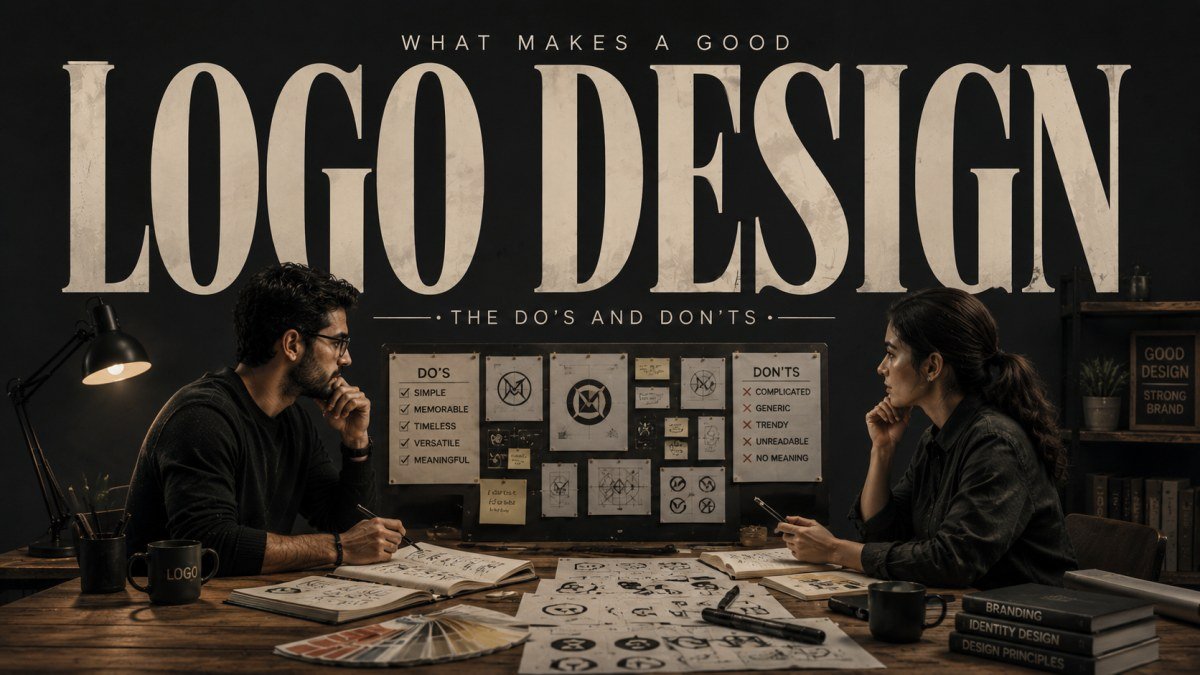
In today's highly competitive business environment, a logo is much more than a symbol or graphic. It is the visual identity of a brand and often the first thing customers notice about a company. Whether you are launching a startup, running an established business, or building a personal brand, your logo plays a crucial role in shaping perception and building trust.
A well-designed logo can communicate professionalism, credibility, and the values of a brand within seconds. On the other hand, a poorly designed logo can confuse customers, weaken brand recognition, and even harm a company's image.
At JiPra Animators, Lucknow, we believe that logo design is not just about creating something visually attractive—it is about creating a meaningful identity that represents the soul of a business. In this blog, we will explore what makes a good logo design, the essential do's and don'ts, the professional logo design process, the importance of originality, and why logic-less AI-generated logos often fail to create lasting brand value.
Why is a Logo Important?

Think about some of the world's most successful brands. Before customers remember their advertisements, products, or slogans, they often remember their logos.
A logo serves several important purposes:
Creates a strong first impression
Builds brand recognition
Establishes trust and credibility
Differentiates your business from competitors
Communicates brand values
Supports marketing and advertising efforts
Your logo becomes the face of your business across websites, social media, packaging, signage, business cards, and promotional materials.
What Makes a Good Logo Design?

A successful logo is not created by chance. It is the result of research, strategy, creativity, and thoughtful execution.
1. Simplicity
The best logos are often the simplest. A clean and uncluttered design is easier to recognize and remember.
Simple logos:
Look professional
Are easy to reproduce
Work across multiple platforms
Remain timeless
Complex designs with too many elements often lose their impact when scaled down.
2. Meaning and Purpose
Every element in a professional logo should have a reason.
Colors, shapes, typography, spacing, and symbols should all contribute to telling the brand story.
A meaningful logo communicates:
Industry relevance
Brand personality
Company values
Business objectives
A logo should never exist merely because it looks attractive.
3. Memorability
A good logo should stay in the minds of customers.
Unique visual elements help create recognition and improve brand recall. When customers see your logo repeatedly, they should instantly connect it with your business.
4. Scalability
A logo must work equally well on:
Websites
Social media profiles
Business cards
Billboards
Product packaging
Mobile applications
Professional designers always ensure the logo remains effective in all sizes.
5. Timelessness
Trends come and go. A logo designed only according to current design trends may become outdated quickly.
A timeless logo remains relevant for years and avoids unnecessary redesign costs.
6. Versatility
A logo should work effectively in:
Full color
Black and white
Single color
Light backgrounds
Dark backgrounds
Versatility ensures consistency across all branding materials.
The Do's of Good Logo Design

Research the Brand
Before designing a logo, understand:
Business goals
Target audience
Industry
Competitors
Brand values
Research creates the foundation for strategic logo development.
Focus on Brand Story
Every logo should tell a story.
The design should visually represent the mission, vision, or unique qualities of the business.
Choose Colors Carefully
Colors influence customer emotions.
For example:
Blue often represents trust and professionalism.
Green symbolizes growth and nature.
Red conveys energy and passion.
Black reflects sophistication and authority.
Color selection should align with brand positioning.
Use Appropriate Typography
Typography plays a major role in brand identity.
Fonts should reflect the company's personality while remaining readable and professional.
Create Original Concepts
Originality helps brands stand out.
Custom-designed logos provide uniqueness and prevent similarity with competitors.
The Don'ts of Logo Design

Don't Overcomplicate
Adding too many symbols, colors, gradients, and effects can make a logo difficult to understand.
Simplicity often creates greater impact.
Don't Copy Competitors
Imitating successful brands damages credibility and weakens brand identity.
Every business deserves a unique visual representation.
Don't Follow Trends Blindly
Design trends change rapidly.
A logo should be designed for longevity rather than short-term popularity.
Don't Ignore Scalability
A logo that looks good only on a large screen may fail on social media or print materials.
Professional testing across different sizes is essential.
Don't Use Random Symbols
Every design element should serve a purpose.
Random graphics without strategic meaning create confusion instead of recognition.
The Professional Logo Design Process

At JiPra Animators, logo design follows a structured creative process.
Step 1: Brand Discovery
We understand:
Company background
Industry
Vision
Target audience
Business goals
Step 2: Research and Analysis
Our team studies competitors and identifies opportunities to create differentiation.
Step 3: Concept Development
Multiple logo concepts are developed based on strategic insights.
Step 4: Sketching and Brainstorming
Ideas are explored through rough sketches before digital execution.
Step 5: Digital Design
Selected concepts are transformed into professional digital designs.
Step 6: Refinement
Typography, spacing, colors, and proportions are carefully adjusted.
Step 7: Presentation and Feedback
Clients review concepts and provide feedback.
Step 8: Finalization
After revisions, the final logo is delivered in multiple formats suitable for digital and print use.
Original Logo Design vs AI-Generated Logos

Artificial Intelligence has made logo creation faster than ever. Numerous AI tools can generate logos within seconds.
However, speed does not always equal quality.
The Problem with Many AI Logos
Most AI-generated logos suffer from several limitations:
Lack of Strategic Thinking
AI does not truly understand:
Brand vision
Company values
Customer psychology
Long-term business goals
It simply combines patterns based on existing data.
Generic Designs
Many AI logos look similar because they rely on repetitive templates and common design patterns.
As a result, businesses often end up with logos that lack uniqueness.
No Emotional Connection
Great logos create emotional resonance.
AI cannot fully understand human emotions, cultural meanings, or nuanced brand stories.
Random and Meaningless Symbols
Many AI-generated logos include shapes and icons that look visually appealing but have no logical connection to the business.
A beautiful symbol without meaning does not strengthen brand identity.
Limited Brand Differentiation
If hundreds of businesses use similar AI-generated designs, standing out becomes difficult.
Why Original Logo Design Still Matters

Professional logo design goes beyond graphics.
An original logo offers:
Brand authenticity
Strategic positioning
Long-term value
Better customer trust
Stronger recognition
Competitive differentiation
A custom-designed logo becomes a valuable business asset that grows alongside the brand.
The Future of Logo Design

AI can assist designers with inspiration and workflow efficiency, but creativity, strategy, storytelling, and human understanding remain irreplaceable.
The most successful logos of the future will combine creative expertise with thoughtful branding strategies rather than relying solely on automated design generation.
Conclusion
A good logo is not just a design—it is a visual representation of a brand's identity, values, and purpose. The best logos are simple, memorable, meaningful, versatile, and timeless. They are built through research, strategy, creativity, and a deep understanding of the business they represent.
While AI-generated logos may offer speed and convenience, they often lack originality, logic, and emotional depth. Businesses seeking long-term brand success should invest in professionally crafted logo designs that tell a meaningful story and create a lasting impression.
At JiPra Animators, we specialize in creating custom logo designs that combine creativity, strategy, and branding expertise to help businesses build strong and memorable identities.
JiPra Animators – 360° Advertisement Agency
📍 Lucknow, Uttar Pradesh
🌐 jipraanimators.in
📞 Call Now: 082992 68065
Share this article
More articles.

Crafting impactful brands, stunning websites, and creative campaigns that drive real results.